
Introduction
Getting a machine learning model to work in a notebook is the easy part. Getting it to work reliably in production — at scale, with monitoring, versioning, and graceful failure handling — is where the real engineering challenge begins.
MLOps brings software engineering best practices to the machine learning lifecycle. This article covers the essential practices that separate production-grade ML systems from glorified Jupyter notebooks.
Version Everything
In traditional software, version control means tracking code changes. In ML, you must also version your data, model artifacts, hyperparameters, and training configurations. Without comprehensive versioning, reproducing results becomes impossible and debugging production issues turns into guesswork.
Tools like DVC, MLflow, and Weights & Biases provide purpose-built versioning for ML artifacts. Choose one and make it non-negotiable — every training run should produce a fully reproducible artifact bundle that can be redeployed months or years later.
Data versioning deserves special attention. Your model's behavior is a function of the data it was trained on. If you cannot precisely identify which data produced a given model, you cannot diagnose why it behaves the way it does.
Automate Training and Deployment Pipelines
Manual model training and deployment processes do not scale and are prone to human error. Build automated pipelines that handle data ingestion, preprocessing, training, evaluation, and deployment as a single reproducible workflow.
Treat your ML pipeline like a CI/CD pipeline. Every change to code, data, or configuration should trigger an automated run that produces a validated, deployment-ready artifact. If the model does not meet predefined quality gates, the pipeline fails and deployment is blocked.
Start simple. A well-structured Makefile or a set of shell scripts is better than no automation at all. Graduate to tools like Kubeflow, Airflow, or Vertex AI Pipelines as your needs grow.
Monitoring and Observability
ML models degrade silently. Unlike traditional software that crashes visibly, a model can quietly produce increasingly wrong predictions as the world shifts beneath it. This phenomenon — data drift — is the single biggest operational risk in production ML.
Monitor input distributions, prediction distributions, and performance metrics continuously. Set up alerts for statistical shifts that exceed predefined thresholds. When drift is detected, trigger a retraining pipeline automatically or alert the team for manual review.
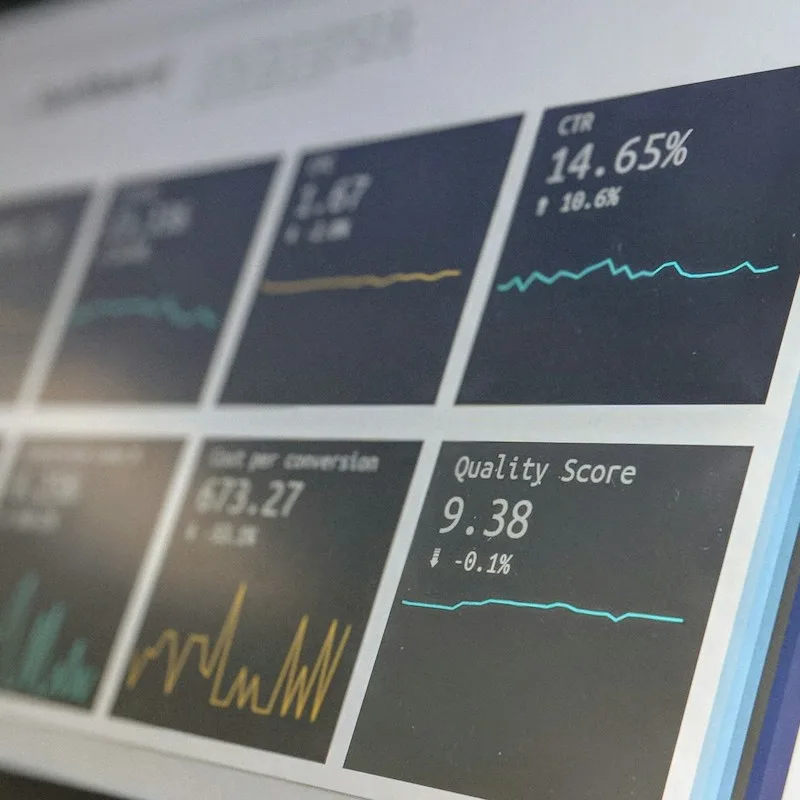
Build dashboards that make model health visible to non-technical stakeholders. Business teams should be able to see at a glance whether the models they depend on are performing within expected parameters.
Testing Strategies for ML Systems
Traditional unit tests are necessary but not sufficient for ML systems. You also need data validation tests, model performance tests, and integration tests that verify the complete prediction pathway.
Data validation tests check that incoming data meets expected schemas, distributions, and quality thresholds. A model trained on clean data will produce garbage if fed malformed inputs at inference time.
Model performance tests compare new model versions against baselines on held-out test sets and production-representative samples. Establish minimum accuracy, latency, and fairness thresholds that must be met before any model reaches production.
Conclusion
MLOps is not a luxury for large organizations — it is a prerequisite for any team that wants to run ML in production responsibly. The practices outlined here represent the minimum viable operations for reliable ML systems.
Start with versioning and monitoring, add pipeline automation as complexity grows, and invest in testing from day one. The upfront cost is modest compared to the pain of debugging an unmonitored, unversioned model that has been silently making bad predictions for months.